


MESOCORT AI to exhibit at Future Forces 2026
01.10.2026

At Mesocort AI, we have been researching human behaviour under high pressure for a long time. We collect data from different areas of human activity and use it to build AI models that help us understand how people behave in stressful situations, explain their behaviour, and most importantly, predict it.
Most of our experience originally came from esports, but over time we found that our research can be useful far beyond computer games. Today, we see strong potential in research and development for the defence sector. Based on our AI models, we are developing a new product called Dronoko, designed for training drone operators in both military and civilian organisations.
The modern battlefield and the world around us are changing — and not only because of the war in Ukraine. Drones are no longer just a new technology or a trend. In many areas, both military and civilian, they are becoming an important tool for making everyday operations more effective.
But the growing demand for skilled drone operators also brings new challenges. There are not enough experienced and well-prepared pilots, and there are also not enough instructors who can train them quickly enough.
The civilian sector has relatively more time to solve this problem. The military does not. If NATO armies want to keep up with the development of the modern battlefield, they need to react quickly and prepare their units for new ways of fighting. Training enough drone pilots for today’s combat conditions is not easy.
This is where we use our experience.
Dronoko uses our AI models to make drone pilot training in simulation faster and more effective. It helps pilots with their training, gives instructors the tools to organise and manage the training process, and helps organisations prepare more pilots in less time.
At the same time, Dronoko gives commanders a clear overview of pilot readiness for both combat and non-combat missions. We take a data-driven approach to training and evaluate pilots using one consistent model, which makes it possible to track and compare performance across larger groups and units.
Dronoko supports the needs of everyone involved in the training process.
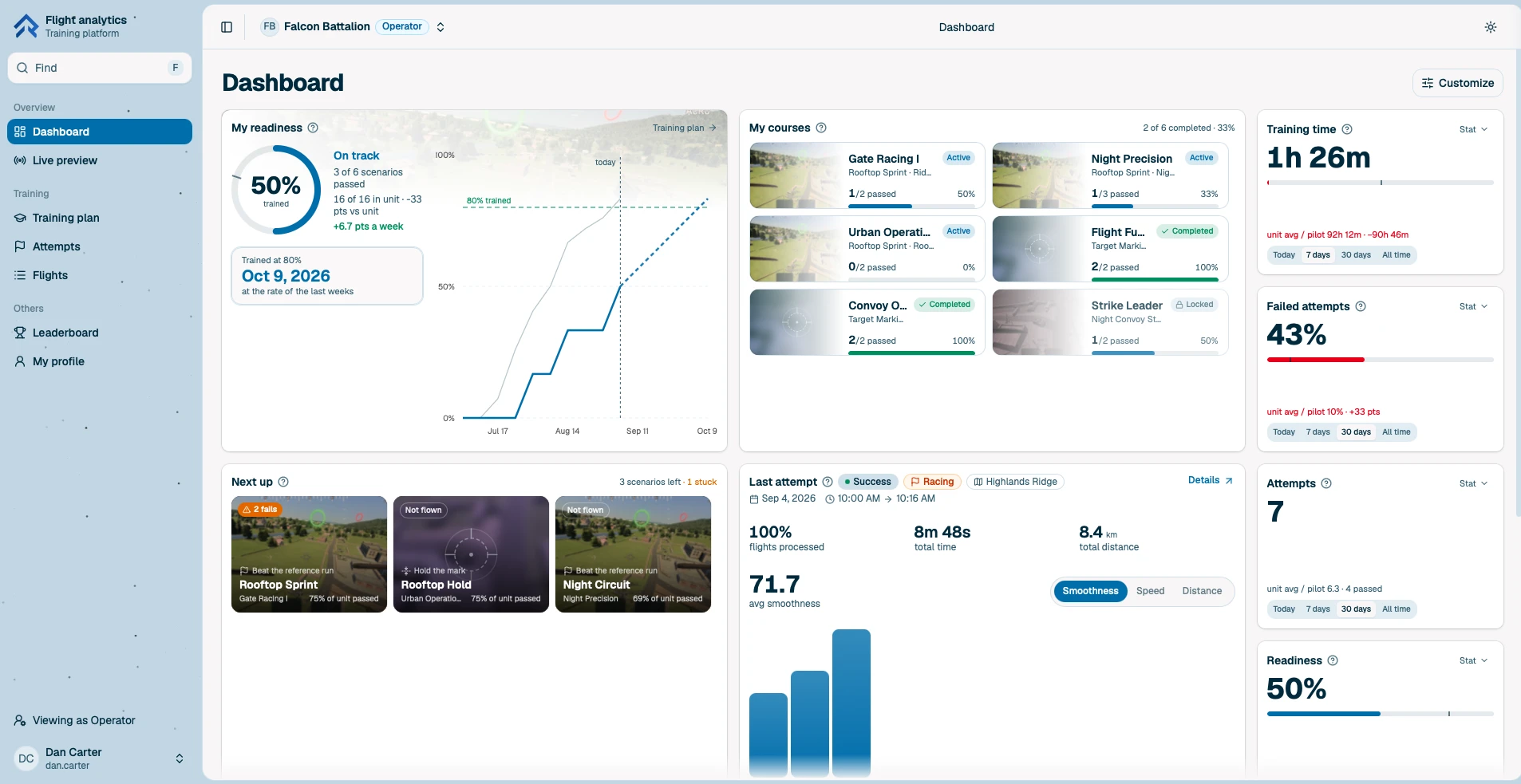
The operator has a clearly defined training plan and always knows what is expected. This can mean learning how to control the drone or preparing for a specific combat scenario. After each mission, the system evaluates the performance, suggests areas for improvement, and stores the data for a later AAR.
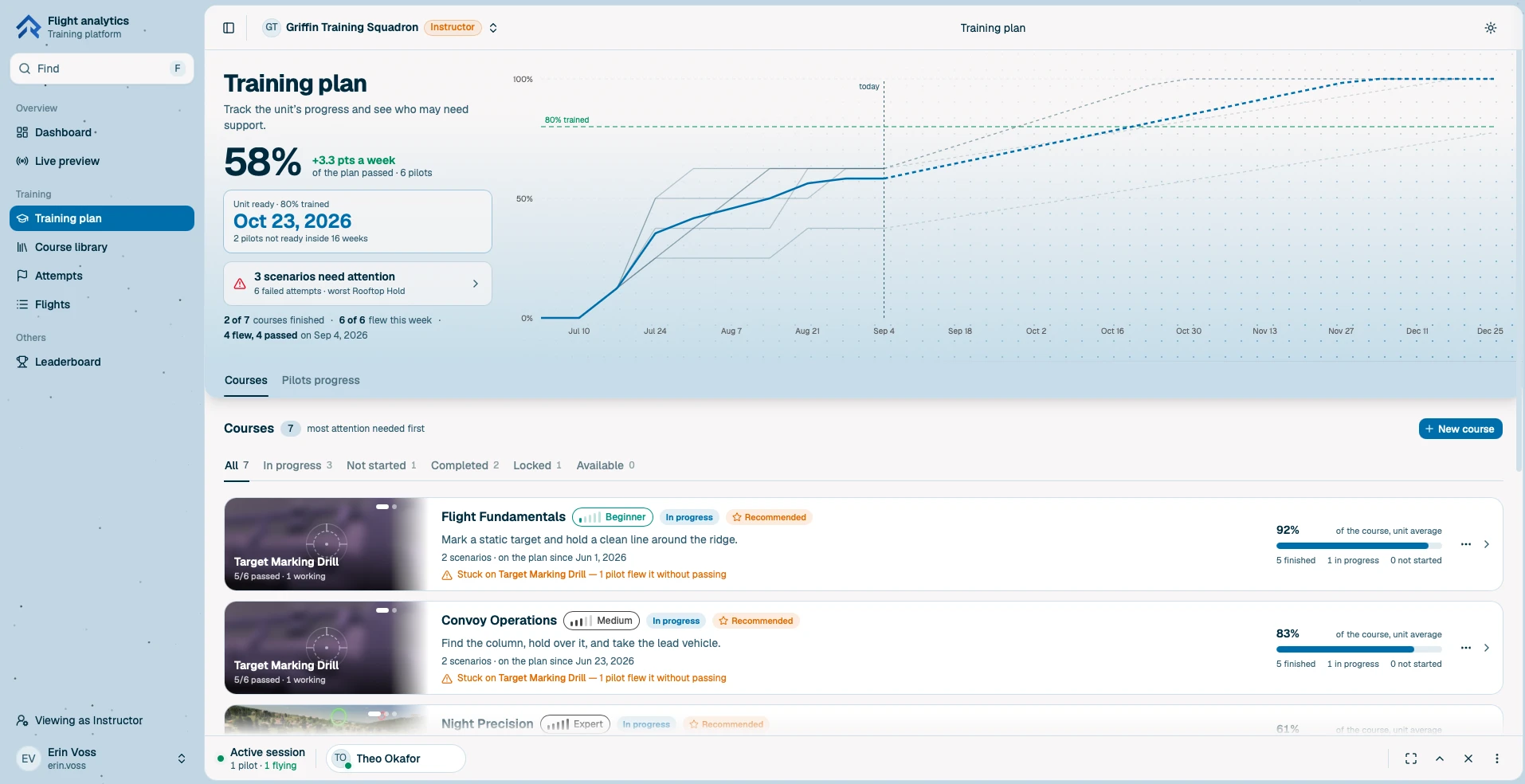
The instructor needs to know how each pilot is progressing, who needs help, and who is ready to move forward. Dronoko provides the information needed to organise and manage the whole training process.
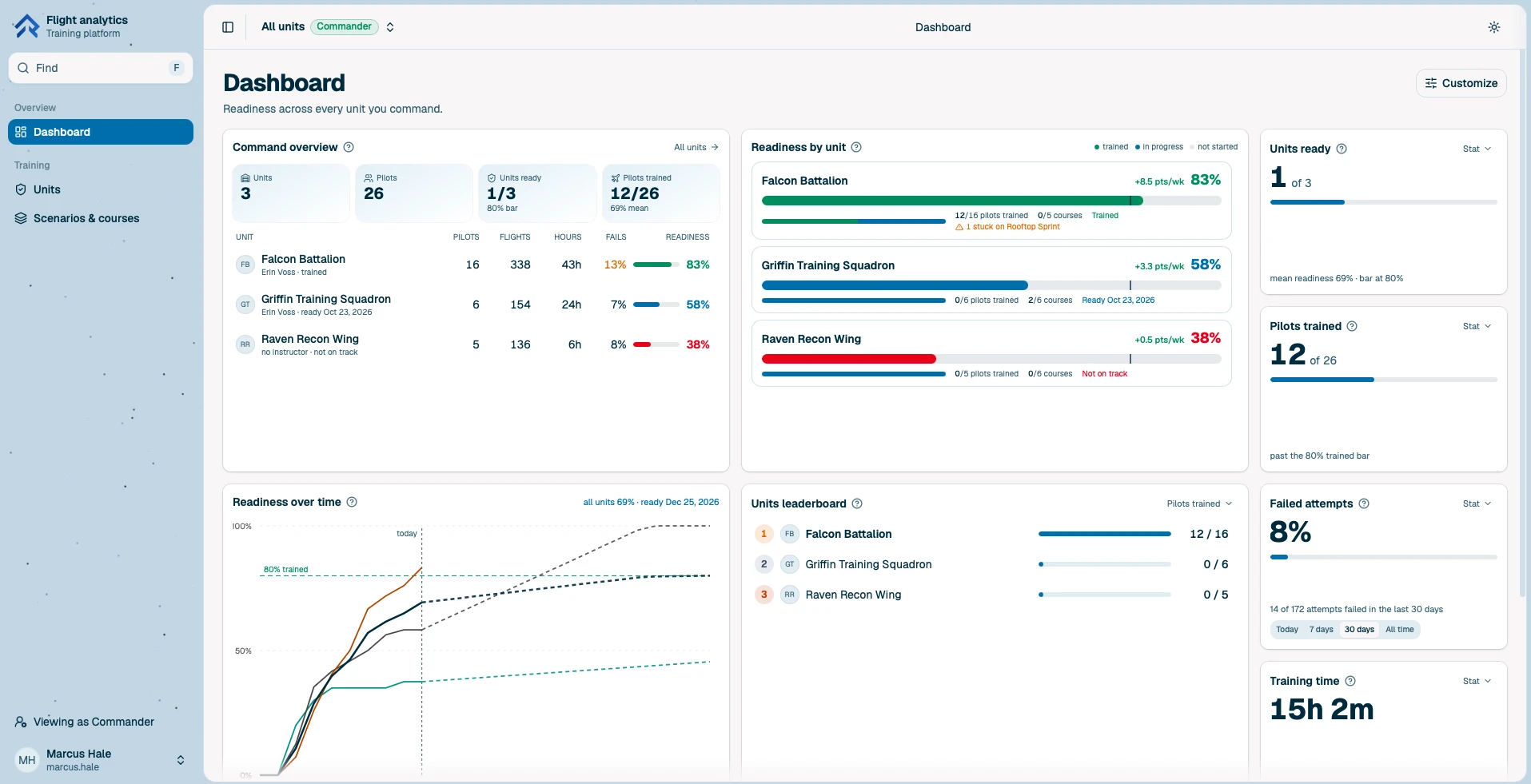
The command level needs a clear picture of how ready individual units are for specific training exercises or real deployment. Dronoko provides an overall view of drone pilot readiness across different units.
Visit us at Future Forces 2026, where we will present Dronoko in action. Come and experience what it is like to fly a drone, learn more about our approach to training, and compete in our system for great prizes.
We look forward to seeing you every day from 9:00 to 17:00.
-
22.10.2026
Meet the Winners of the Future Forces Innovation Awards 2026!
-
21.10.2026
TRL Defense Is Changing the Defence Supply Model, Offering Nations Greater Sovereignty
-
21.10.2026
European Commissioner Andrius Kubilius to deliver keynote speech at Future Forces 2026
-
21.10.2026
EXHIBITOR LIST, FLOOR PLAN & PROGRAMME
-
20.10.2026
OptiDynex & ARMDEF at Future Forces 2026
-
18.10.2026
A suspicious package. A critical moment. GARANT presents the Air Marshall Bag AMB
-
18.10.2026
Drone down. Danger over? GARANT presents the DSR at Future Forces 2026
-
17.10.2026
Finnish defence technology company Bittium showcases secure and resilient communications at Future Forces 2026
-
16.10.2026
HICO to Exhibit at Future Forces 2026
-
15.10.2026
CZ to Showcase Its Comprehensive Portfolio for Armed Forces at Future Forces 2026